What is Triple-Arch Hantile?

With the continuous integration of photovoltaic technology and architectural aesthetics, photovoltaic tiles are gradually becoming an important part of green buildings and home energy systems. Among them, "Triple-Arch Hantile", as a new photovoltaic roof solution in recent years, has attracted more and more attention from consumers because of its aesthetics, functionality and efficient power generation capabilities.

From GreenMore's professional perspective, this article will introduce you in detail: What is Triple-Arch Hantile? What are its advantages? And how can it be combined with energy storage systems to create a smarter home energy ecosystem.

1. Definition of Triple-Arch Hantile

Triple-Arch Hantile is a solar roof tile that imitates the appearance of traditional clay tiles or cement tiles. Its surface adopts a curved structure (usually a three-stage wave shape), hence the name "Triple-Arch". This design not only enhances the consistency with the traditional roof style, but also improves installation adaptability and drainage performance.

From a technical point of view, Triple-Arch Hantile is a modular power generation component made by embedding monocrystalline or polycrystalline silicon solar cells into high-strength glass or composite materials and using a special packaging process. It can directly replace traditional roof tiles.

  • Bionic surface structure
  1. Three-curved surface shape: Drawing on natural curved surfaces such as shells and leaves, a three-dimensional structure of "main curved surface + side curved surface + diversion curved surface" is generated through mathematical modeling. The wind pressure resistance is increased by 40% compared to flat components, and the drainage efficiency is increased by 65%.
  2. Lightweight materials: Using 1.2mm ultra-thin tempered glass + composite fiber backplane, the component weight is reduced to 12kg/㎡, suitable for complex scenes such as curved roofs and special-shaped buildings.
  • Efficient photoelectric conversion
  1. Bifacial power generation technology: The main curved surface is equipped with high-efficiency photovoltaic cells, and the side curved surface is integrated with HJT heterojunction cells (weak light response increased by 15%), achieving full-angle light capture, and the overall power generation efficiency is increased by 22% compared to flat components.
  2. Intelligent heat dissipation system: Micro heat pipes are integrated inside the curved surface, which reduce the operating temperature of components by 10-15℃ through natural convection, and reduce power attenuation by 30% in high temperature environments.
  • Building-level integration
  1. Waterproof lock design: The three-curved edge adopts a trapezoidal bite structure + butyl rubber sealing strip, passes the IP68 waterproof certification, realizes "zero nail hole" installation on the roof, and has an anti-leakage life of over 30 years.
  2. Color customization: Nano-coating technology is used to customize the surface color of components (such as blue-gray, clay, and metallic silver), which seamlessly matches the building facade material and meets aesthetic needs.

2. Core Features of Triple-Arch Hantile

  • Beautiful and natural

It is consistent with the shape of traditional roof tiles, has strong visual coordination, and is suitable for a variety of architectural styles such as villas and townhouses.

  • Easy installation

Modular design supports standard roof construction process, no additional brackets are required, saving installation time and cost.

  • High weather resistance

It has good wind pressure resistance, waterproof, UV resistance and high and low temperature resistance, and is suitable for a variety of climate environments.

  • High power generation efficiency

Using high-efficiency monocrystalline silicon cells, the photoelectric conversion efficiency can reach more than 18%, meeting the daily electricity needs of households.


Triple-Arch Hantile


3. Application Scenarios of Triple-Arch Hantile

Triple-Arch Hantile is particularly suitable for the following types of architectural projects:

  • High-end villa residences: an ideal choice for those pursuing the integration of architectural aesthetics and green energy;
  • Urban renewal and renovation projects: realizing photovoltaic power generation without destroying the original architectural style;
  • Self-built houses: obtain clean electricity at low cost and improve living quality;
  • Low-carbon demonstration communities: Help build zero-carbon buildings and distributed energy networks.

4. The perfect combination of Triple-Arch Hantile + energy storage system

Although Triple-Arch Hantile can generate electricity during the day, its power supply is intermittent and fluctuating, and cannot meet the power demand around the clock. Therefore, in modern home energy systems, it has become a trend to match energy storage systems.

GreenMore provides a complete home energy storage solution that integrates seamlessly with Triple-Arch Hantile to help users achieve:

  • Maximize self-generation and self-use: Excess electricity during the day is stored in GreenMore wall-mounted or stacked energy storage batteries and released for use at night or on cloudy days.
  • Reduce peak loads and fill valleys to reduce electricity expenses: discharge during peak electricity price periods and charge during valley electricity price periods to optimize electricity costs.
  • Off-grid backup power capability: Provides continuous power to critical loads in the event of a grid failure, enhancing energy independence.
  • Smart energy management: Remotely monitor photovoltaic power generation, energy storage status and household electricity consumption through the GreenMore Energy Management App.

We recommend the following energy storage products for use with Triple-Arch Hantile:

  • Wall-mounted energy storage battery: saves space and is suitable for urban residences;
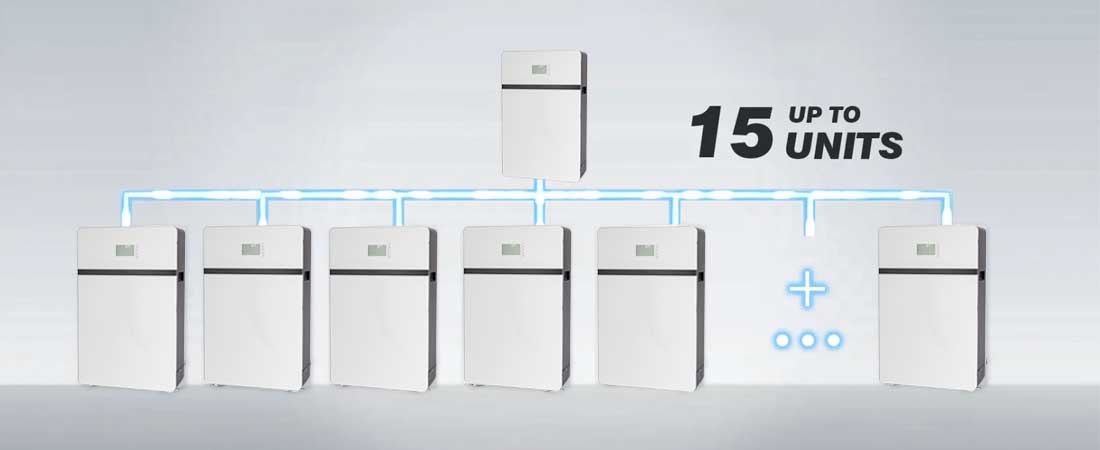
  • Stacked energy storage batteries: modular expansion to adapt to different power generation scales;
  • Home energy storage system: a one-stop solution to home energy storage and scheduling issues.

5. How to choose a suitable Triple-Arch Hantile system?

When planning a Triple-Arch Hantile+ energy storage system, it is recommended to evaluate the following aspects:

  • Roof area and orientation: affects the overall power generation and system capacity configuration;
  • Average daily household electricity consumption: determines the required photovoltaic power and energy storage capacity;
  • Inverter and grid connection method: whether hybrid inverters are needed to support energy storage;
  • Brand and after-sales service: choose suppliers with reliable quality and perfect service;
  • Compatibility with energy storage systems: Ensure that the photovoltaic tiles and GreenMore energy storage batteries operate smoothly together.

As a new type of building-integrated photovoltaic solution, Triple-Arch Hantile is gradually changing the energy role of traditional roofs - from a single function of sheltering from wind and rain to a "green skin" that generates sustainable power.

As a leading manufacturer focusing on the research and development and application of energy storage technology, GreenMore is committed to providing efficient, safe and intelligent energy storage solutions for the Triple-Arch Hantile system, covering wall-mounted energy storage batteries, stacked energy storage batteries and complete home energy storage systems.

If you are considering deploying a photovoltaic power generation system for a new or renovated home and hope to achieve energy self-sufficiency, smart management and green living goals, you may wish to learn more about the perfect combination of Triple-Arch Hantile and GreenMore energy storage products. Contact GreenMore technical team www.gmsolarkit.com


Continue
What size solar system do I need for my home?

With the rise of global energy prices and the enhancement of environmental awareness, more and more families are beginning to pay attention to solar power generation systems, hoping to reduce electricity bills and achieve green and low-carbon life by installing photovoltaic equipment. However, many users face a core question when planning a home photovoltaic project: How big a solar system do I need for my home?

As a manufacturer focusing on the research and development and application of energy storage technology, GreenMore provides complete home energy storage solutions for users around the world. This article will analyze in detail from a professional perspective how to scientifically configure a suitable solar energy system based on your household electricity needs.

1. Determine the average daily household electricity consumption

To calculate the size of the solar system you need, you first need to know your home's actual daily electricity consumption. You can find this out by:

  • Method 1: Check your electricity bill

Most power companies will show your monthly electricity usage (kWh) on your bill. Divide it by 30 to estimate your average daily electricity usage.

Example: If your monthly electricity usage is 300 kWh, your average daily electricity usage is about 10 kWh.

  • Method 2: Manually calculate the power consumption of major electrical appliances

List the power (W) and daily operating time (h) of commonly used electrical appliances in your home, and estimate using the formula Power × Time = Power Consumption (Wh).

Home Appliances Power (W) Daily usage time (h) Daily power consumption (Wh)
Refrigerator 150 24 3600
Air conditioner 1500 4 6000
Illumination 100 6 600
TV 150 3 450
Total     10.650Wh

The capacity of the energy storage battery is configured according to the number of days set

The energy storage system needs to be configured with redundant capacity according to local climate conditions. Taking Beijing as an example, the average number of consecutive rainy days per year is 2.3 days. It is recommended that the energy storage capacity be calculated according to the following formula:

Energy storage capacity (kWh) = battery charge and discharge efficiency × discharge depth average daily power consumption (kWh) × self-sufficient days (days)

For example, if a household with an average daily electricity consumption of 30 kWh requires self-sufficiency for three days and uses a lithium-ion battery with a charge and discharge efficiency of 90% and a discharge depth of 80%, it needs to be equipped with: 0.9×0.830×3=125kWh


2.Calculate the required solar system capacity

Once the average daily electricity consumption is determined, the required solar system installed capacity (kW) can be further calculated.

  • Calculation formula:

Required system capacity (kW) = average daily electricity consumption (kWh) ÷ daily exposure hours (h)

Note: Peak Sun Hours refers to the standard sunshine time when the sunlight intensity reaches 1000W/m², which varies slightly in different regions. For example, in southern China, the average sunshine hours are about 4 hours/day.

Example:

If the average daily electricity consumption is 10 kWh and the average sunshine time is 4 hours, then:

Required system capacity = 10 kWh ÷ 4 h = 2.5 kW

This means that to meet your electricity needs for a day, you will need to install at least a 2.5 kW solar system.


3. Consider the supporting needs of the energy storage system

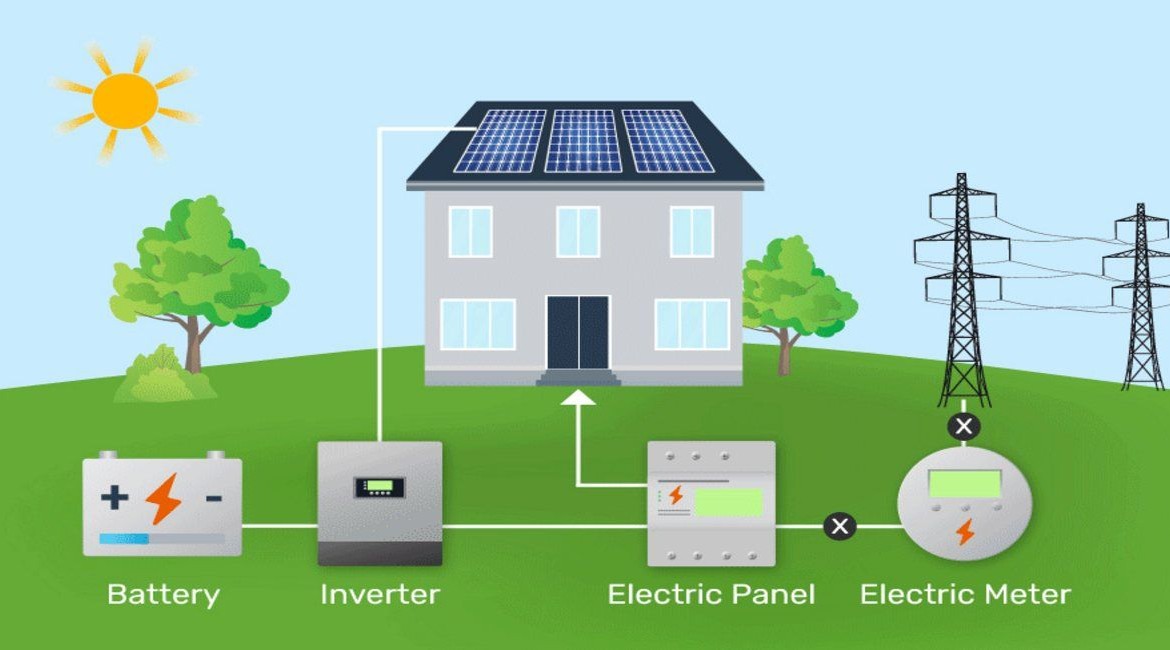
Although solar energy systems can generate electricity during the day, household electricity consumption is often concentrated in the evening and at night. Therefore, in order to achieve true "self-generation and self-use", we recommend using an energy storage battery system.

Energy storage battery capacity selection recommendations:

  1. If the system capacity is 3 kW, a 5–10 kWh energy storage battery is recommended;
  2. If the system capacity is 5–6 kW, a 10–15 kWh energy storage battery is recommended;
  3. If you want to achieve 24/7 off-grid operation, you can choose a higher capacity energy storage system, such as the stacked energy storage battery or home energy storage system provided by GreenMore.

GreenMore Recommended Products:

  • Wall-mounted energy storage battery: suitable for urban residences with limited space;
  • Stacked energy storage battery: modular design, supporting flexible expansion;
  • Home energy storage system: integrates photovoltaics, inverters, and energy storage into one, and can be deployed with one click.


Home Solar Systems


4.Other influencing factors

Before actual installation, the following factors need to be considered:

Influencing factorsI llustrate
Roof area PV panels require about 6–8 square meters of space per kilowatt
Roof orientation South is the best direction, east/west is also acceptable, north is not recommended
Location The light resources in different regions vary greatly, which affects the power generation efficiency
Grid connection policy Some countries support the access of surplus electricity to the grid, which can provide subsidies and increase the return on investment
Energy storage system compatibility Ensure that the PV inverter matches the GreenMore energy storage system

5. How GreenMore can help you customize your solution

GreenMore provides one-stop home energy management services, covering:

  • Solar energy system capacity assessment and design
  • Energy storage system selection and configuration
  • Smart Energy Management System (EMS) deployment
  • International customer technical support and after-sales service

Our team of engineers can recommend the most suitable PV + energy storage combination solution for you based on your household electricity usage habits, geographical location and budget to ensure efficient system operation and maximize return on investment.


6.Conclusion

"How big a solar system do I need for my home?" The answer to this question depends on many factors, including your electricity usage habits, roof conditions, geographic location, and whether there is an energy storage system. Through scientific calculations and reasonable planning, you can accurately configure a photovoltaic system that can meet your daily electricity needs and save electricity bills.

GreenMore is committed to providing safe, intelligent and efficient home energy storage solutions to home users around the world. No matter where you are, we will provide you with professional product and service support to help you move towards a green energy life.

If you are planning a home photovoltaic project, please visit GreenMore's official website www.gmsolarkit.com to contact our international business team for free consultation and personalized solution recommendations.


Continue
123444


Durable Construction: Made from galvanized aluminum-zinc, achieving IP3X protection and reliable anti-misoperation features.


Continue
2017 The 122nd Canton fair

When tomorrow turns in today, yesterday, and someday that no more important in your memory, we suddenly realize that we are pushed forward by time.This is not a train in still in which you may feel forward when another train goes by.It is the truth that we've all grown up.And we become different.

Continue
353q53453q545

Durable Construction: Made from galvanized aluminum-zinc, achieving IP3X protection and reliable anti-misoperation features.

Continue
BYD Solar Energy Storage & Recovery Integration Project

At 11:08 PM on July 30, 2024, Ceepower successfully completed the commissioning of the BYD Solar Energy Storage & Recovery Integration Project in Chongqing, achieving full-capacity operation.


This project, a key peak-load power source for Chongqing’s summer energy supply, is the largest single-user solar+energy storage project in the country. It consists of a 60 MW/240 MWh energy storage system, 10 MW of photovoltaic power capacity, and an energy recovery system, with a peak-load capacity of 67 MW. As a core component of the Bishi Integrated Smart Zero-Carbon Power Plant, the project will enable smart energy management, aggregating various resources such as generation, consumption, and storage to ensure reliable power supply during peak demand periods.


Accelerating Construction to Meet Energy Demands

The BYD Project was launched as part of a commitment to support Chongqing's peak-load electricity needs. With a tight timeline to increase peak-load capacity before summer, the project focused on speed and efficiency. Ceepower, as the joint design, procurement, and construction partner, recognized the importance and urgency of the project. Leveraging its technological innovation strengths, Ceepower worked alongside all project stakeholders to implement a rigorous construction schedule. The team adopted a "5+2" and "day-and-night" work strategy, optimizing construction processes to achieve rapid results: the civil construction was completed in 20 days, the installation in 11 days, and the full-capacity operation in just 88 days.


Overcoming Challenges to Ensure Successful Completion

Throughout the project, Ceepower maintained a strong focus on engineering quality, safety, schedule, and cost control. Drawing on its capabilities in power equipment R&D, comprehensive energy services, and technological innovation, Ceepower collaborated closely with partners to optimize designs and enhance project management. Despite challenges such as tight deadlines, heavy workloads, high temperatures, and rainy season disruptions, the team ensured the project was delivered ahead of schedule, meeting quality and performance targets. This successful completion of the BYD Project was a significant achievement, showcasing Ceepower’s ability to turn ambitious goals into reality.


 Paving the Way for Future Energy Storage Solutions

The completion of the BYD Project represents both a major challenge and a powerful validation of Ceepower’s capabilities. In the rapidly developing energy storage sector, Ceepower is committed to advancing core technologies for large-capacity, long-cycle, low-cost, and high-safety energy storage systems. These technologies meet the growing demand for "new energy+energy storage" applications, providing integrated clean energy solutions that contribute to grid stability, support corporate green transitions, and offer reliable options for safe electricity use.


This project marks a new chapter for Ceepower in the energy storage field, setting a benchmark for future developments and collaborations, and reinforcing Ceepower's leadership in the clean energy transition.


Continue
Ceepower and MEMF Forge Strategic Partnership to Drive Energy Transition

On July 28, 2024, Ceepower and MEMF Electrical Industries Co. (MEMF) signed a strategic cooperation agreement at Ceepower’s headquarters in Fuzhou. The ceremony was attended by Ceepower President, Ms. Chen Manhong, and MEMF's Executive Vice President, Mr. Ahmed A. Al-Mohaimeed, along with other senior leaders from both companies. This partnership marks a significant step in enhancing cooperation in the smart distribution and cable accessory sectors.


MEMF is a leading electrical equipment manufacturer in Saudi Arabia with over 25 years of experience in the GCC region. It has been a trusted partner of Ceepower since 2006, focusing on medium-voltage cable accessories. The new agreement deepens this long-standing collaboration, shifting from product supply to joint research and technological innovation, in line with Saudi Arabia’s Vision 2030 and its energy diversification goals.


The two companies will focus on areas such as equipment supply, technical support, and supply chain optimization over the next five years. This partnership will help drive the region’s energy transformation and reinforce Ceepower’s growing international presence. During their visit to Ceepower’s production facilities, MEMF’s delegation was impressed by Ceepower’s innovations in smart electrical solutions and its focus on sustainable energy development.


This strategic agreement not only strengthens Ceepower’s footprint in the Middle East but also positions both companies to contribute significantly to the region’s energy transition, providing innovative solutions in line with global sustainability goals.


Continue
Ceepower Attends Inaugural China-Nigeria Trade Forum

Ceepower attended the inaugural China-Nigeria Economic and Trade Cooperation Forum, held during the 2024 China-Africa Forum in Beijing, which marked the upgrading of China-Nigeria relations to a comprehensive strategic partnership. The forum facilitated discussions between Ceepower, Nigerian government officials, and businesses on key areas of collaboration, including power, renewable energy, and smart technologies.


The event, themed “Precise Matching,” aimed to strengthen ties between Chinese businesses and Nigerian state governments. Nigeria, as Africa’s largest economy and China’s primary export market in the region, presents significant opportunities for trade and investment.


At the forum, Ceepower engaged in targeted trade talks with Nigerian officials, focusing on key sectors such as energy storage, smart grid solutions, and rail transport. The company’s participation underscores its commitment to expanding in the African market, leveraging its extensive industry expertise and customer base.


Ceepower aims to use this collaboration to explore new opportunities in Nigeria and contribute to the global energy transition through its integrated solutions in cable accessories, smart distribution equipment, and energy storage. This marks a significant step in Ceepower’s strategy to expand its footprint in the international market, especially in Africa.


Continue
Ceepower Energies Yukun High-Speed Railway

On September 29th, the Chongqing-Yibin section of the Chongqing-Kunming High-Speed Railway officially opened. Ceepower’s subsidiary, Wuhan Wuchang Electric Control Co., Ltd., supplied 126 prefabricated substations, ensuring reliable power along the 192-kilometer route.


Designed for speeds of up to 350 km/h, this section significantly shortens travel times between major cities, reducing the journey from Chongqing to Luzhou East to just 26 minutes, and to Yibin Station in as little as 48 minutes. It enhances regional connectivity and supports the development of the Chengdu-Chongqing economic circle and the Yangtze River Economic Belt.


Ceepower’s modular, compact substations are tailored to Sichuan’s complex terrain, providing a stable power supply for the safe operation of this critical rail line.


Committed to innovation and excellence, Ceepower continues to support the expansion of China’s rail infrastructure.


Continue
Ceepower Makes Major Strides in International Rail Market

Ceepower has recently made notable advancements in the international rail sector, securing contracts worth over 60 million CNY. Key projects include the Masi Railway in Guinea, the Masi Railway Branch with Rio Tinto, and the East Coast Rail Link (ECRL) in Malaysia. These contracts emphasize the growing global presence of Ceepower’s core products, including prefabricated substations and high- and low-voltage switchgear from its subsidiary, Wuhan Electric Controlgear Co., Ltd.


Transforming Guinea’s Rail Infrastructure

The Masi Railway, spanning 552.5 kilometers, will be the first dual-track heavy-duty railway, equipped with a satellite-based signaling system. This project aims to enhance transportation efficiency and stimulate regional economic growth through improved mineral resource development. Ceepower’s success in this contract signifies its strategic entry into the African rail market.


Connecting Malaysia with the East Coast Rail Link

The ECRL connects Kota Bharu to Port Klang over 665 kilometers, serving as a critical infrastructure project under the Belt and Road Initiative. It will improve transport links between Malaysia’s east and west coasts, fostering balanced regional development. Wuchang Electric Control will supply essential electrical equipment for this project, further solidifying Ceepower’s reputation for quality and reliability in the global market.


Strengthening Global Operations

With a commitment to advanced research and development, Ceepower is set to expand its offerings in cable accessories, photovoltaic storage solutions, and other energy products. This aligns with its strategy to actively participate in the global energy transition, driving sustainable development through innovative solutions.

Ceepower’s recent achievements in the rail sector not only enhance its international footprint but also demonstrate its dedication to delivering high-quality solutions that meet the demands of global infrastructure projects. The company is focused on contributing to a sustainable future through strategic expansion and innovation in the energy sector.


Continue
Home Archives